

Attic Mold Removal in Suffolk, VA
Suffolk's year-round humidity and elevated moisture levels create conditions where attic spaces become particularly vulnerable to mold growth, especially in older homes where ventilation and moisture barriers may be inadequate. Attic mold removal addresses this problem before mold spreads to insulation, framing, and other structural components, protecting both the integrity of your home and the air quality your family breathes. Eaton Mold Remediation connects Suffolk property owners with local mold removal providers who can assess attic conditions and perform thorough remediation tailored to your home's specific needs.
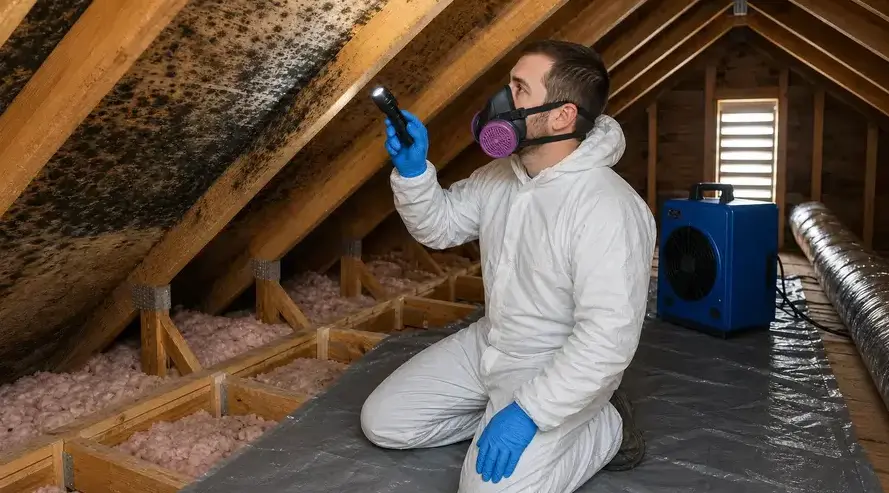
What gets cleaned in an attic, and what comes out
Whether a material is cleaned in place or removed is not decided by how bad the mold looks. It is decided by what the material is made of and how large the affected area is. Below is the EPA’s published guidance on both counts, for an attic.
| Material | Under 10 sq ftabout a cabinet door, or one ceiling tile | 10 to 100 sq ftroughly one wall, or a small bathroom | Over 100 sq ftmore than one room's worth of surface |
|---|---|---|---|
| Wood surfacesroof sheathing, rafters and trussesEPA, Table 2 | Wet vacuumDamp wipeHEPA vacuum | Wet vacuumDamp wipeHEPA vacuum | Wet vacuumDamp wipeHEPA vacuumRemove and discard |
| Wallboardthe ceiling drywall below, seen from aboveEPA, Table 2 | HEPA vacuum | HEPA vacuumRemove and discard | HEPA vacuumRemove and discard |
What those methods mean, in EPA's words
- Wet vacuum
Wet vacuums are vacuum cleaners designed to collect water. They can be used to remove water from floors, carpets and hard surfaces where water has accumulated.
EPA, cleanup methods- Damp wipe
Mold can generally be removed from nonporous (hard) surfaces by wiping or scrubbing with water, or water and detergent.
EPA, cleanup methods- HEPA vacuum
HEPA (High-Efficiency Particulate Air) vacuums are recommended for final cleanup of remediation areas after materials have been thoroughly dried and contaminated materials removed.
EPA, cleanup methods- Remove and discard
Building materials and furnishings that are contaminated with mold growth and are not salvageable should be double-bagged using 6-mil polyethylene sheeting.
EPA, cleanup methods
Removed and replaced, whatever the area
- Fiberglass or other insulation — batt or blown insulation across the attic floor.
Fiber glass, or any other insulation material that is wet or visibly moldy (or if an unacceptable odor is present) should be removed and replaced by a qualified heating and cooling system contractor.
EPA, air duct cleaningEPA states this in its heating-and-cooling guidance and it is quoted here as written. Its water-damage table reaches the same conclusion for both fiberglass and cellulose insulation. - Insulated air ducts — insulated HVAC ducts run through the roof space.
If you have insulated air ducts and the insulation gets wet or moldy it cannot be effectively cleaned and should be removed and replaced.
EPA, air duct cleaningThe affected runs are what get replaced — not necessarily the whole system.
These guidelines are for damage caused by clean water. If you know or suspect that the water source is contaminated with sewage, or chemical or biological pollutants, then Personal Protective Equipment and containment are required by OSHA.
EPA, Table 1Porous materials that are wet and have mold growing on them may have to be discarded.
EPA, cleanup methodsMold can grow on wood, drywall, carpet and furniture if they remain wet for more than 24 hours.
EPA, flood cleanup
Attic mold is usually a ventilation fault rather than a leak — most often a bathroom fan discharging into the attic, or soffit vents blocked by insulation. The sheathing and rafters are wood, so they can often be cleaned and kept. The insulation underneath them cannot, and nor can any insulated duct running through the space.
Freezing nights number roughly 56.2 a year in Suffolk, concentrated in January.Source: NOAA 1991-2020 Climate Normals, SUFFOLK LAKE KILBY, VA US station (1 mi from Suffolk)
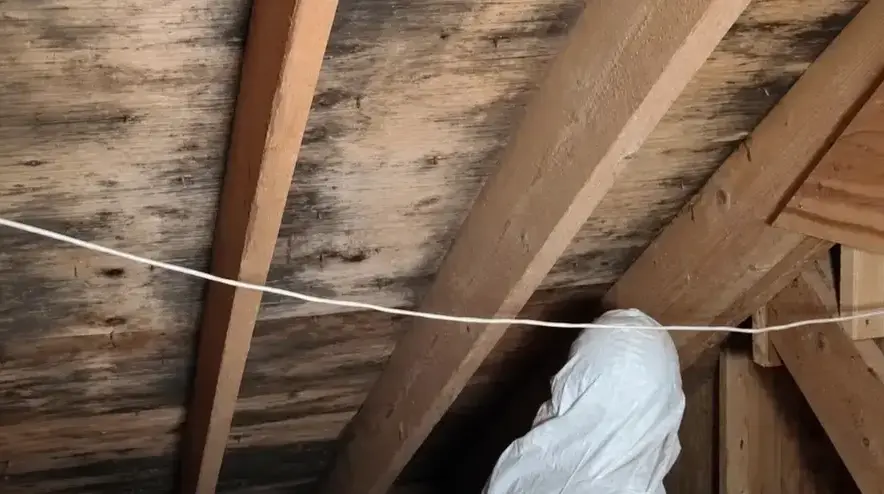
Attic Mold Removal in Suffolk, VA: Local Solutions
Suffolk's humid subtropical climate maintains elevated moisture levels in homes year-round, creating an environment where mold thrives—especially in attics, where poor ventilation and temperature fluctuations can trap moisture and accelerate growth. Many homes throughout Suffolk, including older properties in neighborhoods like North Suffolk and Harbour View, are particularly vulnerable to attic mold because of the region's consistently high humidity and the way moisture naturally rises and collects in upper spaces. When moisture accumulates in an attic, it can affect indoor air quality, compromise structural materials, and create conditions that spread mold spores to living areas below. Addressing attic mold promptly is essential to protect both your home's integrity and your household's health.
Eaton Mold Remediation connects Suffolk property owners with independent local providers who specialize in thorough attic mold removal and inspection. These providers assess the full extent of mold growth, identify moisture sources, contain affected areas safely, remove contaminated materials and debris, and restore proper ventilation to prevent recurrence. Rather than offering a quick surface fix, the goal is lasting remediation that tackles root causes and restores your attic to a dry, mold-free state. By connecting you with local professionals who understand Suffolk's moisture challenges, Eaton Mold Remediation helps you take decisive action and move forward with confidence in your home's condition.
Why Suffolk Property Owners Choose Eaton Mold Remediation
Fast Local Attic Mold Removal
Eaton connects you with independent local providers who respond quickly to attic mold concerns. Rapid response limits moisture spread and protects indoor air quality before the problem grows.
Thorough Attic Mold Inspection
Attic mold often hides behind rafters and insulation. Eaton's network providers conduct detailed inspections to identify all affected areas, ensuring removal targets the complete scope of contamination.
Clear Communication Throughout Removal
Attic mold removal involves containment, safe removal, and moisture control. Independent providers in Eaton's network explain each step, keeping you informed so you understand the work being done.
Attic Mold in High-Humidity Climates
Suffolk's year-round moisture in the air creates persistent conditions for attic mold growth. Elevated indoor humidity year-round means attic spaces stay vulnerable; thorough removal paired with proper ventilation is essential for lasting results.
How Our Attic Mold Removal Process Works
Schedule Your Attic Mold Removal Visit
Contact Eaton Mold Remediation to connect with a local attic mold removal provider in Suffolk. They'll discuss your attic concerns, answer questions about the inspection process, and schedule a time to assess your home.
Receive Your Attic Mold Assessment
A local provider inspects your attic to identify mold growth, moisture sources, and affected materials. In Suffolk's humid climate, elevated moisture year-round can create conditions where attic mold takes hold—your provider documents findings and explains what attic mold removal will involve.
Complete Attic Mold Removal and Clearance
The provider removes contaminated insulation and materials, addresses moisture sources, and restores your attic space. You'll receive guidance on preventing future attic mold growth and maintaining healthy indoor air quality in your home.
Dealing with Attic Mold Removal in Suffolk? Get fast, professional help.
Call Now — (757) 551-2235Attic Mold Removal Serving Suffolk and Nearby Areas
Suffolk's humid subtropical climate maintains elevated indoor moisture levels throughout the year, creating conditions where attic mold can develop and persist. Attics are particularly vulnerable in this environment because they're often the warmest part of a home—a combination that, paired with persistent humidity and poor ventilation, allows mold to take hold in insulation, roof framing, and structural components. Property owners in neighborhoods like North Suffolk and Harbour View, as well as throughout the older residential areas of the city, frequently discover mold growth in their attic spaces as a result of these year-round moisture conditions.
When attic mold is discovered, prompt removal becomes important both for protecting the home's structural integrity and for maintaining healthy indoor air quality. The independent local providers this service connects property owners to can assess the extent of attic mold, identify moisture sources, and carry out removal work using appropriate containment and remediation methods. Getting professional attention early helps prevent the problem from spreading to other areas of the home.
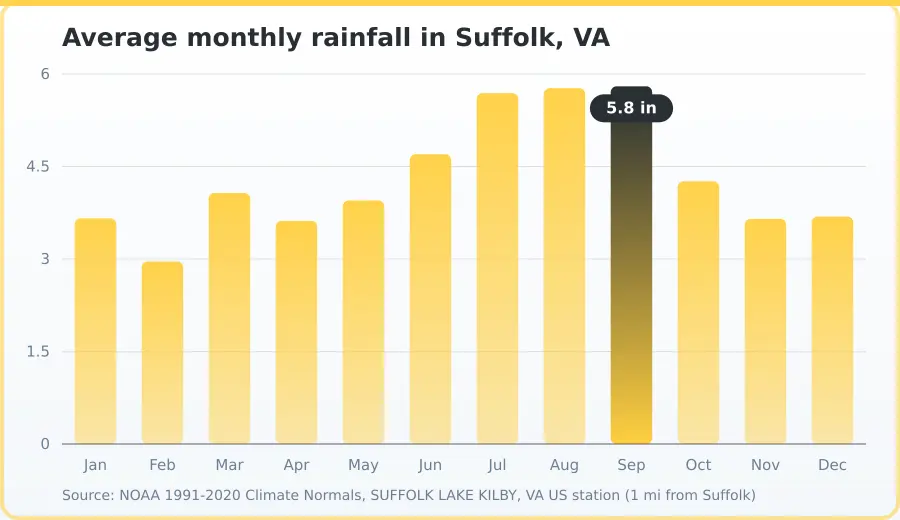
| Period | Monthly rainfall (in) |
|---|---|
| Jan | 3.7 |
| Feb | 3 |
| Mar | 4.1 |
| Apr | 3.6 |
| May | 4 |
| Jun | 4.7 |
| Jul | 5.7 |
| Aug | 5.8 |
| Sep | 5.8 |
| Oct | 4.3 |
| Nov | 3.7 |
| Dec | 3.7 |
Source: NOAA 1991-2020 Climate Normals, SUFFOLK LAKE KILBY, VA US station (1 mi from Suffolk). Retrieved October 27, 2026.
Seasonal Attic Mold Removal Needs in Suffolk, VA
Spring: Thaw and Moisture Rise
Spring warming in Suffolk brings snowmelt and increased rainfall, pushing moisture into attics as ventilation systems struggle with temperature swings. Attic mold often accelerates during this transition period. Eaton Mold Remediation connects property owners with local providers who inspect attics for early-stage growth before summer heat amplifies the problem.
Summer: Heat and Humidity Peaks
Summer humidity in the Suffolk region reaches its highest levels, and attic spaces—already prone to trapped moisture—become ideal environments for mold proliferation. Inadequate attic ventilation combined with seasonal humidity causes visible mold blooms on wood framing and insulation. Eaton connects homeowners with providers who assess ventilation and moisture barriers to halt active attic mold growth.
Fall: Moisture Retention and Decay
Fall rainfall in Suffolk combines with cooling temperatures that reduce natural attic air circulation, allowing moisture to settle and condense on structural wood. Attic mold takes advantage of this stagnant, damp environment to establish deeper colonies. Eaton Mold Remediation helps property owners access local removal providers who can address deteriorating conditions before winter traps moisture indefinitely.
Winter: Persistent Humidity and Condensation
Cold-season heating in Suffolk homes creates indoor-outdoor temperature contrasts that drive condensation into uninsulated or poorly sealed attics. Year-round humidity characteristic of the region means attic moisture never fully dries, allowing existing mold to persist and new growth to establish during winter dormancy. Eaton connects owners with local providers who remediate winter mold accumulation and address underlying moisture sources.
Attic Mold Removal FAQs — Suffolk, VA
Attic mold removal begins with inspection to identify affected areas, moisture sources, and extent of growth. The local provider will contain the work area, remove contaminated insulation and materials safely, clean and treat remaining surfaces, then address the underlying moisture problem—often ventilation or roof leaks—to help prevent recurrence. Proper disposal and air handling are essential throughout.
Eaton Mold Remediation connects Suffolk property owners with local independent providers who can typically respond promptly to scheduling requests. Contact us with details about your attic mold concern, and we'll match you with an available provider in your area to arrange an inspection and begin remediation.
Pricing for attic mold removal depends on the affected area's size, mold extent, insulation replacement needs, and moisture-source repairs required. The independent provider will assess your specific situation and discuss costs during the inspection. Contact Eaton to connect with a local provider who can provide a detailed estimate.
Before attic mold removal begins, clear the space of personal items and stored materials from the affected zone. Ensure roof access is safe and unobstructed. The independent provider will give specific preparation instructions during scheduling. Avoid disturbing visible mold yourself; let the professional handle containment and removal safely.
After attic mold removal, maintain proper ventilation to control moisture and humidity levels. Fix roof leaks promptly, ensure gutters drain away from the foundation, and check that attic vents are clear and functioning. Regular inspections help catch early signs of moisture before mold takes hold again.
Suffolk's year-round humidity keeps attic moisture levels consistently elevated, making mold risks present throughout the seasons rather than isolated to one time. However, spring and fall often bring increased rainfall and temperature shifts that can accelerate attic moisture problems. Having your attic inspected during these seasons can help catch mold early.
Related Services
Homeowner Safety Toolkit
Verify Your Suffolk, VA Mold Remediation Company
Before you hire anyone, use these independent national resources to confirm credentials, standards, and track record.
CDC
Covers the health effects of mold exposure and safe cleanup practices, separate from the remediation work itself — useful if anyone in the home has respiratory symptoms.
Mold Health GuideIICRC
Publishes the S520 standard for professional mold remediation. Confirm a company's technicians hold real, current IICRC certification before you hire them.
Verify CertificationBBB
Look up any mold remediation company's complaint history, customer reviews, and accreditation status — a free, independent check before you hire.
Check StandingDealing with Attic Mold Removal in Suffolk, VA? Call (757) 551-2235 for 24/7 help.
Call Now — (757) 551-2235Areas We Serve in Suffolk, Virginia
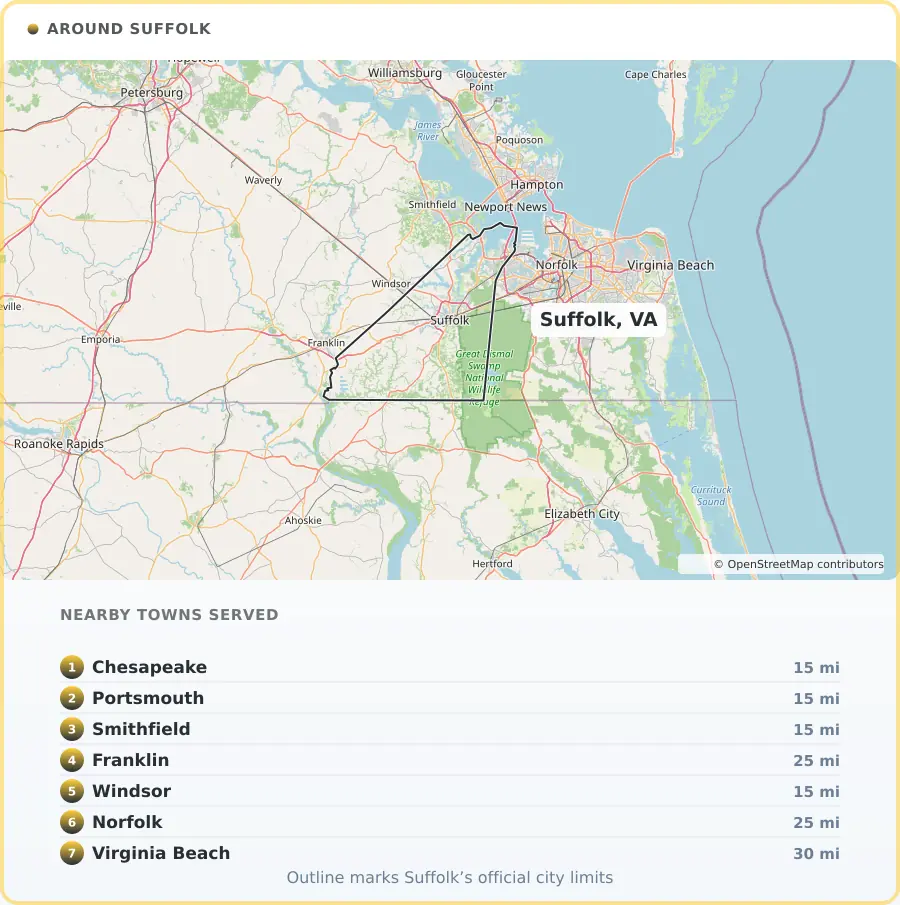
Based in Suffolk, VA, with 7 nearby communities inside the service area — near enough to reach quickly, not just listed on a map.
Suffolk, VA Information
Suffolk, VA spreads across a broad stretch of Hampton Roads, where working farmland still meets fast-growing suburban neighborhoods. With roughly 95,000 residents, the city holds onto its peanut-processing roots—Birdsong Peanuts and Smithfield Foods remain local mainstays—while logistics has become the new growth engine, drawing major distribution centers for Amazon, Target, and Lowe's thanks to easy highway access near the Port of Virginia.
From the historic storefronts of Downtown Suffolk to the newer waterfront communities around Harbour View, the city blends small-town familiarity with real regional ambition. Healthcare and public service round things out, with Sentara Obici Hospital and the City of Suffolk itself among the area's largest employers, giving Suffolk a steady, community-rooted backbone.

Photo: Billy Hathorn, CC BY-SA 3.0